Quality Checks Top Brands Ensure in Their Montessori Materials for Home

Premium product quality is one of the features that distinguishes top market players from mass mediocrity. As a result, industry leaders are careful about the quality parameters they maintain for their products. Some of the best manufacturing brands have well-established procedures to maintain optimal quality for their products. In this discussion, we’ll explore the quality control measures followed by leading brands in the Montessori product space.

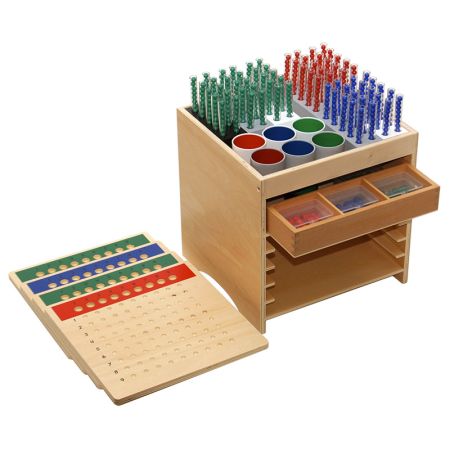
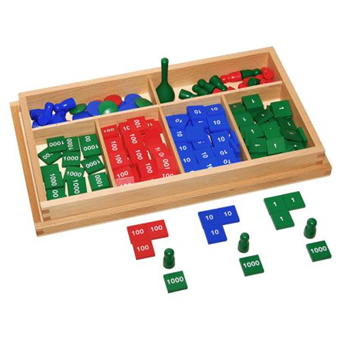
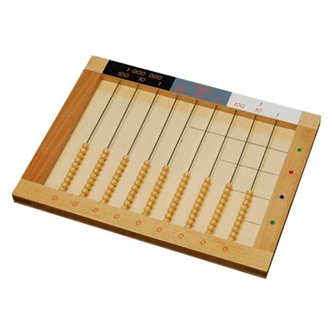
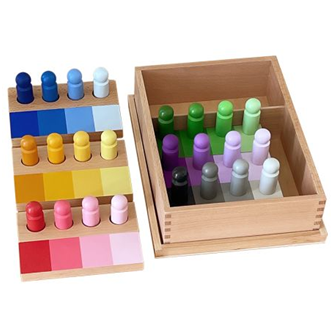
Montessori Materials for Home

Premium Raw Materials

The raw material quality is one of the first quality standards top brands of Montessori Materials for homes  maintain in their products. These brands select raw materials for their products with careful thought. The raw materials should enhance the final product’s quality, ensure safety for children, and remain cost-effective.

Best Production Standards

After raw materials, the second most vital aspect of quality Montessori Materials for home is the production standards of the products. Top-rated brands invest heavily in their production units. These brands have the capability to match their product quality with quantity. These companies have highly modern and elite production units with the best machines and the latest technology. As a result, these brands can maintain the quality of their production functions.  Hence, these brands like to improve and improvise their production standards regularly.

Montessori Materials for Home

Internationally Approved Design Standards

Leading manufacturing brands use internationally approved designs for Montessori materials. These educational tools play a crucial role in early childhood learning, targeting a sensitive stage of brain development in young children. Since this also has a direct impact on cognitive growth, it is essential that their designs are endorsed by respected global authorities. As a result, top brands have standardized their Montessori products to meet educational and safety requirements across various countries and continents.

Innovative and Modern Designs

Massive changes and developments have come in the Montessori instructive tool designs. These days, you can find a massive variety of such tools that can assist young brains in learning new information. Furthermore, these instruments also help teachers to instruct students of different caliber. Not all students are bright in a class. As it is, teaching toddlers can be challenging, if they have some other cognitive problems, the task can become all the more difficult. However, with high-quality instructional materials, teachers can overcome many challenges. As a result, some of the leading brands for these tools invest in innovative and unique designs. These new models try to cater to the requirements of the growing children in a way they have not done in the recent past.

Child Safety Features

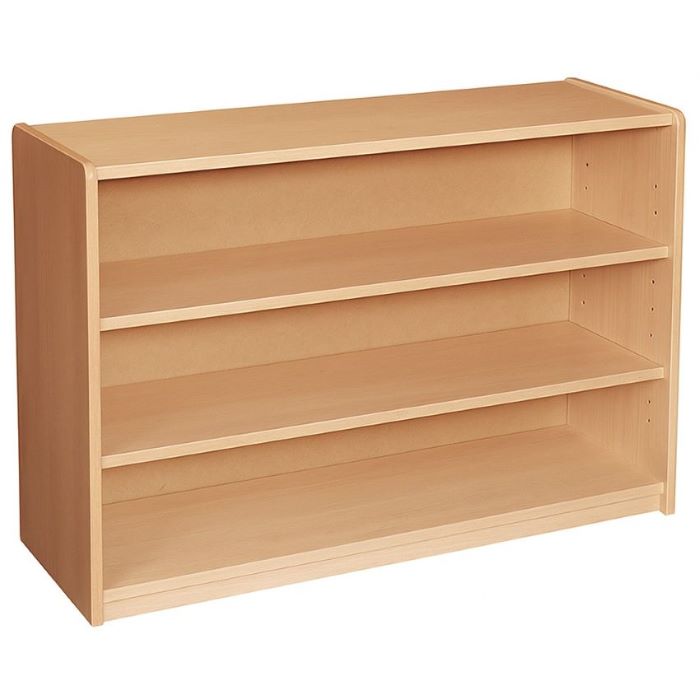
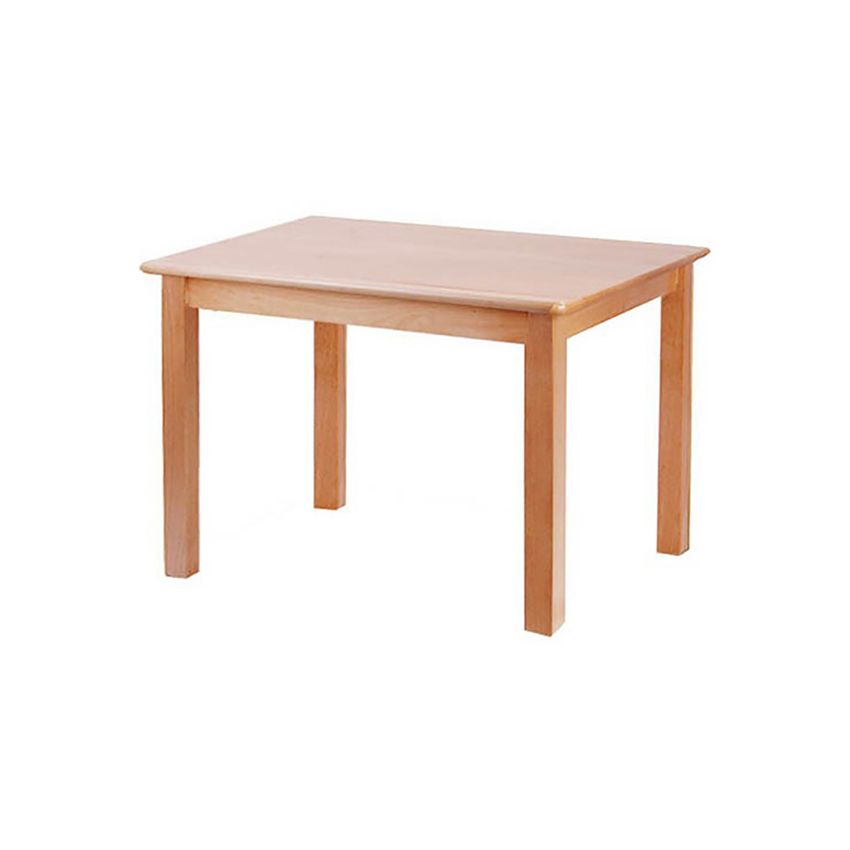
These brands ensure various child safety features in their products. These instruments have no sharp or pointed edges, which can hurt young children. Similarly, these educational instruments have no loose small parts that young children can swallow and cause other forms of accidents. Furthermore, the instruments have skin-friendly colors so that they do not lead to skin issues. Other items like furniture pieces help keep children comfortable and healthy while studying.

Resource: https://kidadvance.com/blog/quality-checks-top-brands-ensure-in-their-montessori-materials-for-home

How Montessori Materials Boost Independent Learning in Early Childhood

Introduction

Early childhood is a time of rapid development, where children absorb information from their surroundings at an extraordinary pace. Their natural curiosity drives them to explore, observe, and interact with the world around them. While conventional education methods often emphasize memorization and repetition, progressive approaches focus on nurturing independence, creativity, and hands-on learning.

The Impact of Montessori Materials in Early Education

A key component in many innovative classrooms today is the use of Kid Advance Montessori Materials. These specially crafted educational tools are designed to support a child’s natural desire to learn. Unlike standard toys or worksheets, they encourage self-correction, critical thinking, and exploration. Each material targets a specific skill or concept—such as counting, language, or motor coordination—while also promoting problem-solving abilities.

By allowing children to engage at their own pace, these tools transform abstract ideas into concrete experiences. A child using the pink tower, for example, isn’t just stacking blocks—they’re understanding size, balance, and sequencing. The learning becomes intuitive, not forced.

Creating a Child-Centered Learning Environment

One of the hallmarks of the Montessori method is its emphasis on the prepared environment. Classrooms are organized in a way that gives children the freedom to choose activities based on their interests and readiness. Materials are arranged neatly and accessibly, fostering autonomy and decision-making.

This independence builds confidence. Children are not told what to do—they are guided to discover it themselves. As a result, learning becomes a personal journey rather than a chore. They begin to trust their own instincts, leading to stronger self-esteem and a lifelong love for learning.

The Science Behind Sensory Learning

Children learn best when multiple senses are engaged. Research in developmental psychology supports the idea that sensory input strengthens memory and comprehension. That’s where Montessori Materials excel—they engage sight, touch, and sometimes even sound or smell.

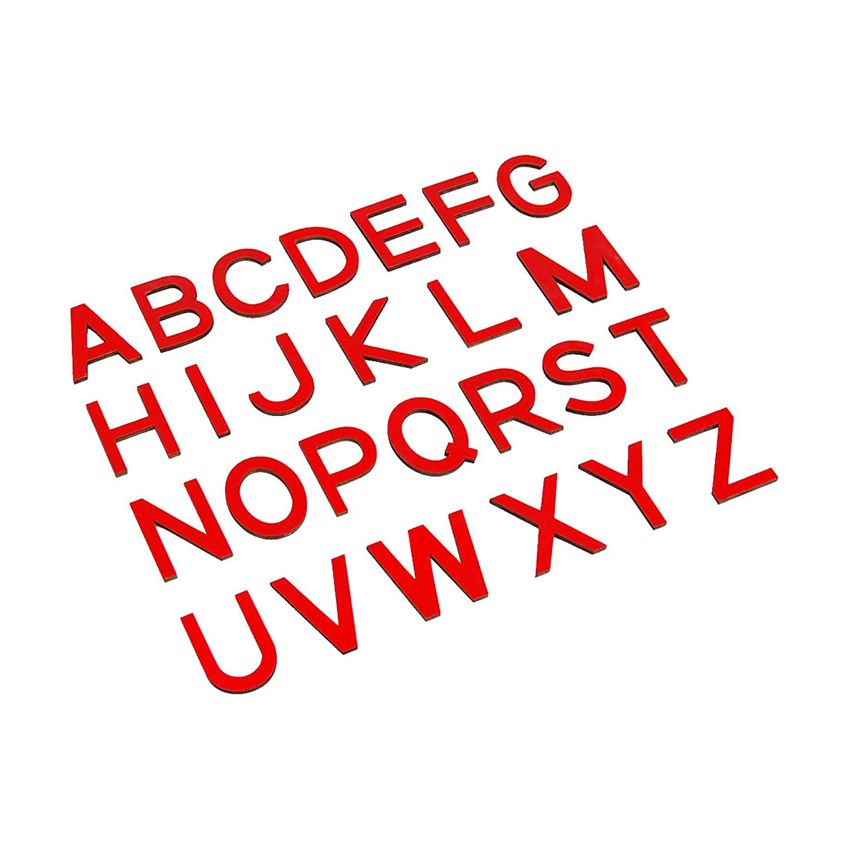
Consider the sandpaper letters used for learning the alphabet. Children trace each letter with their fingers while saying the sound aloud. This multisensory interaction links visual recognition with kinesthetic memory and auditory processing. The result?Deeper learning and better retention.

Benefits Beyond Academics

While these tools are effective in teaching math, language, and science concepts, their benefits go far beyond academics. They also support emotional and social development. Many materials encourage collaboration, patience, and respect for others’ space and work.

Additionally, fine and gross motor skills are refined through purposeful activity. Whether it’s pouring water between jugs, buttoning frames, or transferring beads with tweezers, every task is building physical coordination alongside mental focus.

This holistic development sets a strong foundation for future success—not just in school, but in life.

Choosing the Right Educational Tools

When selecting learning tools for young children, it’s important to prioritize quality and intention. Not all toys are educational, and not all educational materials are developmentally appropriate. Look for items that promote open-ended play, invite exploration, and allow for gradual skill progression.

Montessori-aligned materials often stand out for their simplicity and purpose. They are typically made from natural materials like wood, and designed with aesthetics and function in mind. These qualities make them inviting and durable—ideal for long-term use in both classrooms and homes.

Frequently Asked Questions (FAQ)

What are Montessori Materials?

Montessori Materials are specialized educational tools used to support hands-on, self-directed learning in young children. They help teach specific skills in areas like math, language, and practical life while encouraging independence and critical thinking.

Are Montessori Materials only for classrooms?

No, these materials can be effectively used at home as well. Parents can set up small learning stations or shelves with Montessori-inspired items to encourage their child’s curiosity and exploration outside of school.

Do I need to be trained to use them with my child?

While formal training helps, it is not essential. Many parents use Montessori-style materials at home successfully by observing their child’s interests and following their lead. Reading about the philosophy and understanding the purpose behind each material is a good starting point.

What age group are these materials best suited for?

Montessori Materials are designed for a wide range of ages, starting as early as infancy up to elementary years. Each material is tailored to the developmental stage of the child, making them highly adaptable and effective.

Can Montessori methods work alongside traditional education?

Yes. Many families blend Montessori principles with other educational approaches. The key is to encourage independence, allow choice, and create a learning environment that values exploration over rote memorization.

Conclusion

Montessori education continues to inspire parents and educators around the world because it respects the natural rhythm of childhood learning. The strategic use of Montessori Materials not only supports academic growth but also nurtures independence, confidence, and a lifelong love of learning. By bringing thoughtful, hands-on tools into a child’s daily routine, we open the door to deeper understanding and more joyful discovery—both in and out of the classroom.

Resource: https://kidadvancemontessori.blogspot.com/2025/08/How-Montessori-Materials-Boost-Independent-Learning-in-Early-Childhood.html

Areas Where Your Child Can Excel with the Best Montessori Materials

Parents are always on tenterhooks regarding the developmental index of their children. They try to provide premium privileges and benefits to their children to ensure optimal nurturing. Contemporary education for children begins at the young age of two to two and a half years. This is the age when children go to Montessori schools to begin their academic training schedules. The Montessori schools prepare children for their admission to formal schools. Montessori education is the first-ever learning stage for young children and their parents.

A Brief Dive into the Idea of a Montessori School

Many wonder about the difference between Montessori learning and formal school education. Montessori education is meant for toddlers, who get their first-ever exposure to learning. Children learn about all aspects around them from this initial learning stage. This is a teaching pattern that is more about helping children identify different things around them and preparing them for their learning experience in formal school. Innovative Montessori Materials can help your child learn information in diverse genres.

Names of Living Beings

Since Montessori training helps children identify things around them in their daily lives, much of premium quality Montessori Materials can help your child identify the names of animals, birds, fruits, vegetables, and natural elements like trees, plants, flowers, etc., around them.

Relate With Alphabets

These materials have a bright and illustrative design. Young toddlers learning the alphabet for the first time, use these teaching equipment pieces to relate the alphabet with items around them. When toddlers see the shape of an ‘a’ or ‘A’ with the picture of an apple, they can grasp and retain the information better. The process is repeated in the case of the other alphabets as well.

Names of Inanimate Items

Like the names of living beings, children can also learn the names of several inanimate objects they see around them with the help of these illustrative learning items. You can help your child learn the names of different non-living objects around them too, like chairs, tables, beds, utensils, home appliances, vehicles, places, etc. With time, your child will grow a better awareness of the environment around them in return.

Introduction to Shapes and Colors

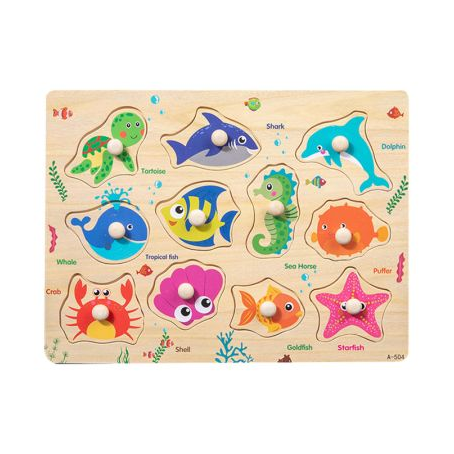
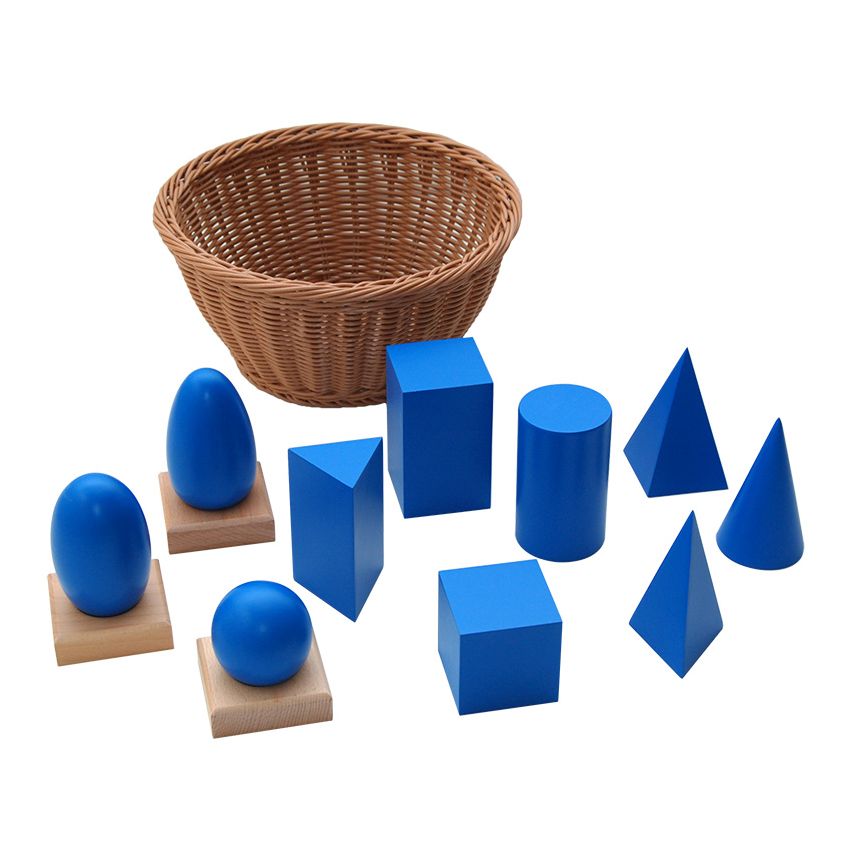
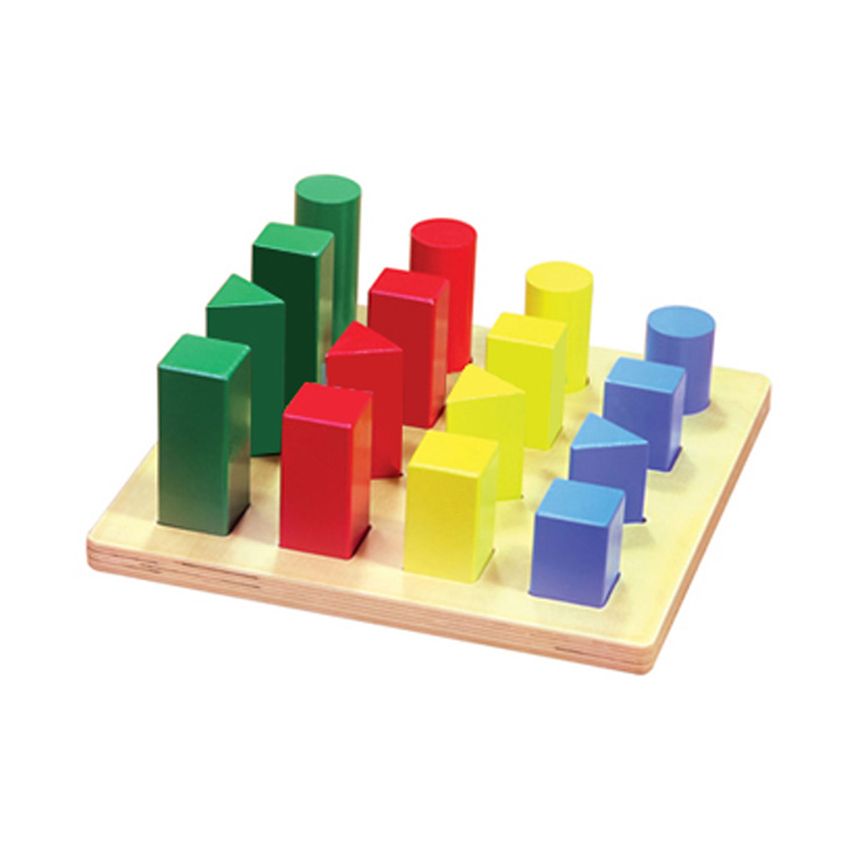
Apart from the names of living and non-living beings, these items can help teach your child the names of shapes and colors. To teach them shapes you can get shape puzzles, where the child must match the correct shape to the empty void space on a wooden board. Hence, your child learns about shapes and colors, and at the same time, you can develop reasoning and motor skills.

Learn Living Habits

Some of the best manufacturers of top-grade Montessori learning items produce different play items that can help your child learn about different lifestyle patterns in a playful engagement. You get first aid kits, dental kits, and personal grooming kits, which can teach your child how to keep themselves clean, practice daily hygiene’s, and also act in times of emergency, like sudden accidents.

Resource: https://kidadvance.com/blog/areas-where-your-child-can-excel-with-the-best-montessori-materials

Exploring the Educational Impact of the Pink Tower in Montessori

Introduction

Early childhood education is not just about learning ABCs or 123s—it’s about developing a child’s ability to observe, reason, and understand the world around them. When children are provided with thoughtfully designed learning tools, they become naturally curious and motivated to learn. Among the most respected approaches to early education is the Montessori method, which focuses on independence, hands-on learning, and self-directed activity.

The Role of the Pink Tower in Sensorial Development

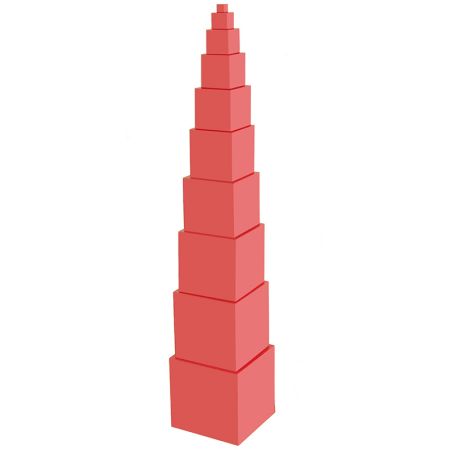
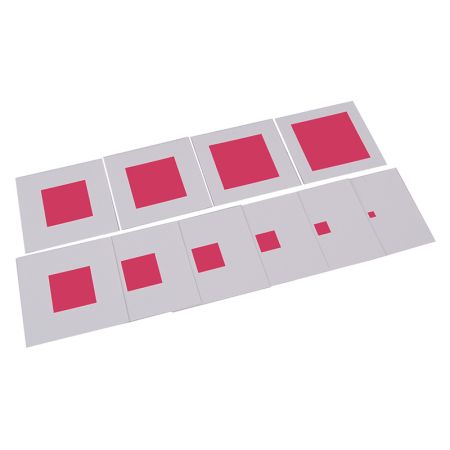
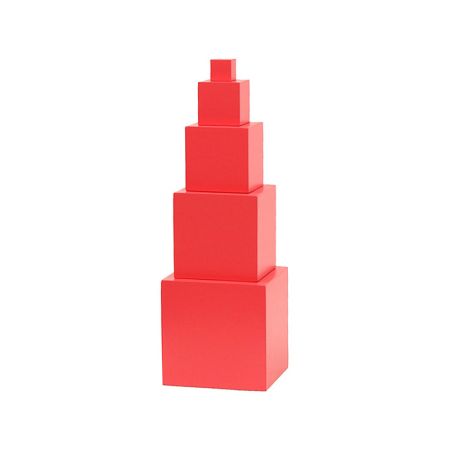
One of the most iconic Montessori materials is the Kid Advance Pink Tower, a set of ten pink wooden cubes that vary incrementally in size. On the surface, it may appear to be a simple stacking toy. But its design serves a deeper purpose—enhancing visual discrimination of size, volume, and dimension.

When children interact with the Pink Tower, they begin to understand gradation and sequence. This sensorial exploration is essential for building early mathematical thinking. As they move cubes from the shelf to the floor and back again, they also develop motor control, concentration, and precision.

Promoting Cognitive Growth Through Hands-On Experience

Children learn best when they can manipulate materials with their hands. The tactile experience of the Pink Tower encourages exploration, experimentation, and discovery. They learn to compare, contrast, and correct their mistakes without adult interference—nurturing critical thinking and self-correction.

By stacking cubes in order from largest to smallest, children also start grasping abstract concepts like sequencing, patterns, and balance. These are foundational skills for subjects like geometry and physics later in life.

The Pink Tower and Independence

A key element in Montessori philosophy is fostering independence. The Pink Tower empowers children to complete tasks on their own. From carrying the cubes one by one to arranging them carefully on a mat, every step encourages responsibility and self-mastery.

Over time, children develop a sense of ownership over their learning. This confidence carries over into other areas of education and daily life. As they work independently with the material, they also strengthen their ability to focus and work with intent.

Supporting Language and Math Readiness

Although it is a sensorial tool, the Pink Tower naturally supports language development and mathematical reasoning. Children often describe what they see using comparative terms like “big,” “bigger,” “small,” and “smallest.” These descriptors enrich their vocabulary while also reinforcing the relationships between sizes.

On the mathematical side, the consistent progression in cube size introduces concepts of base-10 and volume. While these concepts may not be named explicitly at this age, children are building an internal understanding that prepares them for more advanced learning in later years.

A Foundation for Future Learning

Montessori materials are designed to be both beautiful and functional, encouraging repeated use. The Pink Tower is no exception. As children revisit the material, they refine previous learning and discover new aspects. It’s not just a toy—it’s a tool that supports lifelong skills such as logical reasoning, patience, order, and concentration.

Parents and educators often report that children who engage regularly with Montessori materials like the Pink Tower show stronger problem-solving skills, greater independence, and a love for learning that lasts beyond the classroom.

Frequently Asked Questions (FAQ)

Q1: At what age can a child start using the Pink Tower?

A: Most children can begin working with the Pink Tower around age 2.5 to 3, depending on their motor skills and readiness. It’s often introduced during the sensitive period for order and coordination.

Q2: How does the Pink Tower help with math skills?

A: Though it’s a sensorial tool, it lays the groundwork for math by teaching size differentiation, sequencing, and volume relationships—all of which are core mathematical concepts.

Q3: Can the Pink Tower be used at home or is it only for schools?

A: Absolutely! The Pink Tower can be a valuable part of a home learning environment. It encourages independent play and can be paired with other Montessori-style activities.

Q4: Is it okay for children to play with the Pink Tower creatively, like building towers in different shapes?

A: Yes, creativity should be encouraged once the traditional use has been practiced. After mastering the basic stacking activity, children can explore other configurations to extend learning.

Final Thoughts

The Pink Tower is more than just a learning aid—it’s a carefully designed educational tool that supports a child’s development in multiple domains. Through hands-on, self-directed play, children gain the confidence and skills they need for future academic success. Incorporating the Pink Tower into a child’s early years helps nurture curiosity, structure, and a strong love of learning.

Resource: https://kidadvancemontessori.blogspot.com/2025/08/Exploring-the-Educational-Impact-of-the-Pink-Tower-in-Montessori.html

Develop a Better Personal Learning Environment with Top Montessori Materials for Home

Teaching young children is a crucial task, especially as they begin their journey into formal education in Montessori schools. The foundation they build through Montessori training plays an essential role in preparing them for admission to top-tier schools. Therefore, it’s important for parents and caregivers to support their child’s learning at home by reinforcing educational lessons. To ensure your child’s steady progress in their studies, providing the right Montessori materials at home is key to creating an effective learning environment.

Replicate the school environment at home

A proper learning environment is essential for every child. Montessori students, in particular, need the right infrastructure to reinforce and review the concepts they’ve recently learned at school. Parents can turn to prestigious brands like Kid Advance Montessori to buy some of the best Montessori Materials for Home. Young children always find it more helpful to study in an environment similar to their school. 

Enjoy Single-Window Solution Providers

Montessori materials for home can vary widely. They include educational tools, play-based items, as well as furniture and blackboards, all of which help create a comfortable and focused environment for children to engage in their studies. Finding all these various items can be a challenge. However, everything becomes much simpler when you choose a brand that offers a wide range of products in one place. Some of the best brands in the market have a prominent online presence. You can visit their online stores to explore their diverse product array and buy all the items necessary for your child.

Ensure Your Child’s Safety

You must be careful while selecting and buying Montessori items for your child at home. You will always not be around when your child handles and plays with these items. Hence, you must buy products that are safe for your child. As a result, you must turn to some of the best brands that invest in optimal product quality. These brands use the best quality raw materials for their products. Furthermore, they ensure objects have no sharp or pointed sides or corners, making the products highly suitable for young children.  Your child will be safe all the while they use the items.

Get Pocket-Friendly Deals

One of the main advantages of purchasing instructive materials for Montessori-level education for young children is the high-end and sophisticated product quality. These toys, furniture, and educational materials are highly safe for young kids. Best quality raw materials and the latest manufacturing technology help to manufacture optimal quality training materials that can keep young children safe, secure, and healthy while using these items. Precise design and measurement standards help in the development of world-class final products for their customers.

Shop with Convenience

Shopping for Montessori materials has never been easier or more convenient. Simply visit the brand’s online store, browse through the available items, and select what you need. Then, proceed to checkout, make your payment, and provide your delivery address.

Resource: https://kidadvance.com/blog/develop-a-better-personal-learning-environment-with-top-montessori-materials-for-home

Montessori Materials – Things That These Toys Can Teach Your Child

Often, when we go through the range of the Montessori teaching items, we see items that can help your child learn new information. At first glance, these materials look simply fit for playing with, but it also helps engage your child during their studies. Therefore, top-grade Montessori grade teaching materials can benefit your child significantly.

Purposeful Creations

Some of the best Montessori Materials from top-rated manufacturers like Kid Advance Montessori have unique and purposeful designs. The purpose goes much beyond just helping your child learn and retain information about academic details, it helps teach them problem solving skills and to be more independent. In this discussion, we will go over the subtle things your child learns with the help of these best-quality toys.

Coordinating Shapes

Most Montessori Materialslike the Montessori toys from leading brands like “Kids Advance”, have a jigsaw design. These toys are made of wood, plastic, fiber, and other touch-friendly materials that do not break. Shapes of animals, flowers, fruits, or geometrical shapes are cut out and fitted into matching puzzle shapes. The idea of the game is that all the shapes or cut-outs are taken out and the child is supposed to put back the shapes into the matching voids. This game is supposed to help a child learn the names of animals, fruits, geometric shapes, etc. However, the subtle purpose is to allow the child to match shapes and find identical puzzle pieces for every space.

Holding and Handling

Motor skills indicate how well a child can hold and handle an instrument. This instrument or item can be educational, an entertainment toy, pencil box, pencils, etc. When you allow your child to manage different items and elements while they learn actively, your child will become comfortable handling various things. As a result, they can handle all things around them in their daily lives better, and they can become more confident and independent. This will enhance the child’s self-management skills when the caregivers, family members, and parents are not around.

Organization and Discipline

One of the main things that you must teach your child is to organize their things and handle them with discipline. The toys and the Montessori materials are some of the most suitable items for parents and caregivers to teach their children the art of organizing their things and keeping them disciplined after use. The training helps every child to manage their items without the help of their parents and caregivers, which will allow them to manage their belongings better.

Ensure Safety

Apart from the aspects of learning, parents are always worried about their child’s safety. Some top-grade learning materials and toys for Montessori kids have simplistic designs and safe finishes. These toys have no loose parts and do not threaten children safety.  These Montessori training items do not have any sharp or pointy edges. As a result, they are very safe for young children and toddlers.

Resource: https://kidadvance.com/blog/montessori-materials-things-that-these-toys-can-teach-your-child

Montessori Materials for Home and Classroom: Essential Guide and Tips

Understanding the Montessori Approach

The Montessori method is an educational philosophy that emphasizes independence, hands-on learning, and self-directed activity. It is designed to nurture a child’s natural curiosity and help them develop practical skills in a structured environment. Whether you are setting up a Montessori classroom or incorporating this learning style at home, having the right materials is crucial for a child’s development.

Essential Montessori Materials for Home and Classroom

Kid Advance Montessori Materials rely on carefully designed tools that engage children in meaningful learning experiences. These materials are self-correcting, allowing children to discover answers independently, which builds confidence and problem-solving skills.

Practical Life Materials

Practical life activities help children develop fine and gross motor skills, coordination, and independence. These include:

  • Pouring exercises with pitchers and cups
  • Buttoning and lacing frames
  • Sweeping and dusting tools
  • Watering plants and caring for the environment

These activities not only refine motor skills but also instill a sense of responsibility and order.

Language and Literacy Materials

Language development is a key focus in Montessori education. Materials that support literacy skills include:

  • Sandpaper letters to introduce phonics
  • Moveable alphabet for word formation
  • Picture cards for vocabulary expansion
  • Phonetic reading books

These tools help children build a strong foundation in reading and writing at their own pace.

Mathematics Materials

Montessori math materials are designed to make abstract concepts more tangible. Essential tools include:

  • Number rods for counting and sequencing
  • Bead chains for understanding place value
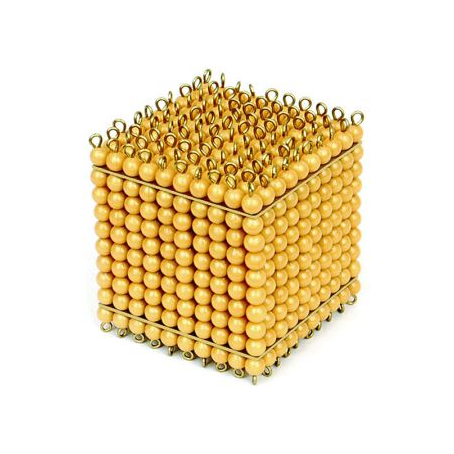
  • Golden bead materials for learning addition, subtraction, multiplication, and division
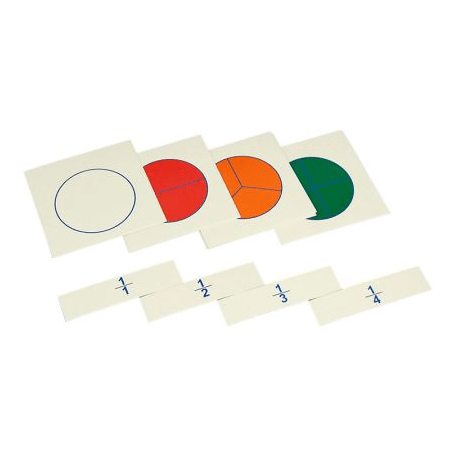
  • Fraction insets to introduce early geometry concepts

By using these materials, children gain a deep understanding of mathematical principles before moving to more complex topics.

Cultural and Science Materials

Montessori classrooms integrate cultural studies with hands-on activities, including:

  • Geography puzzles and globes
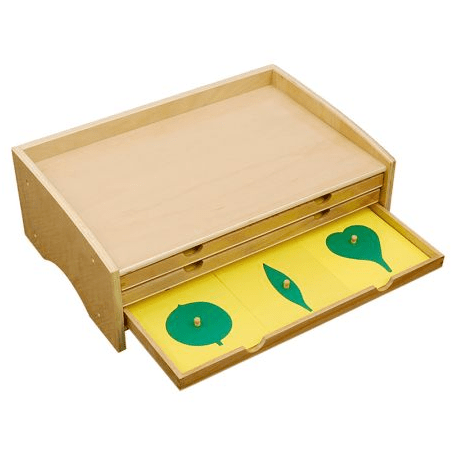
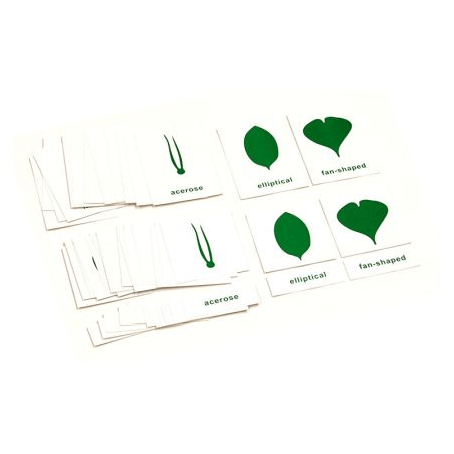
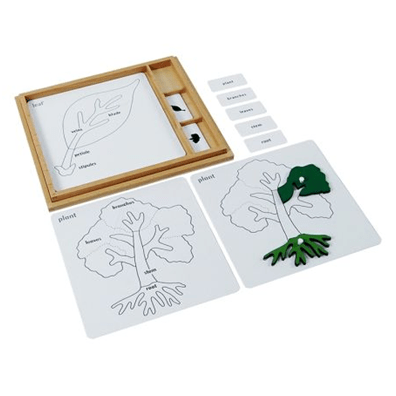
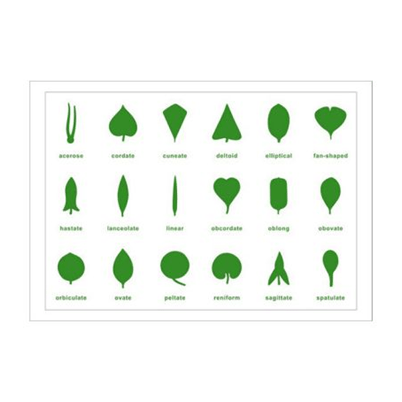
  • Botany puzzles for plant study
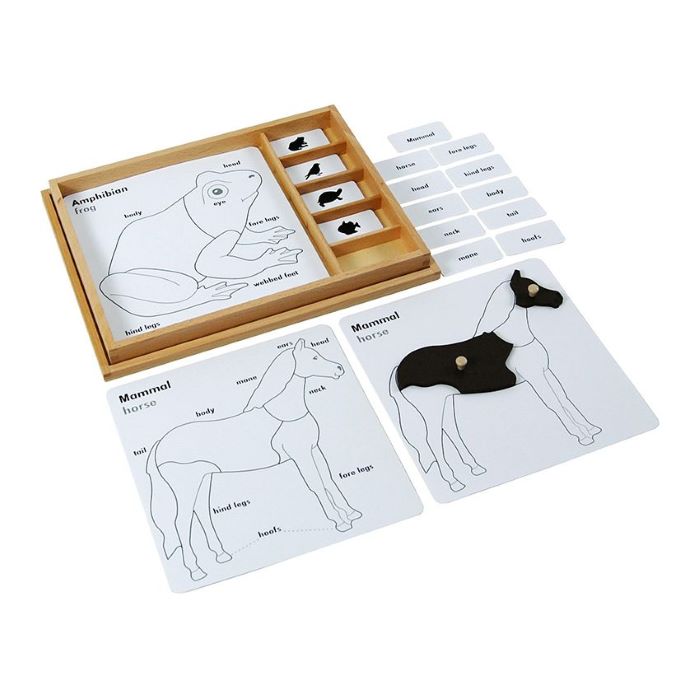
  • Zoology cards for learning about animals
  • Simple physics experiments to explore natural laws

These materials encourage children to explore the world around them and develop an appreciation for nature and science.

The Role of Sensorial Materials for Montessori Education

Sensorial materials for Montessori education are specially designed tools that help children refine their senses and enhance cognitive development. These materials allow children to explore differences in size, shape, texture, color, weight, and sound.

Popular Sensorial Materials

  • Pink Tower: Helps develop visual discrimination of size and enhances fine motor control.
  • Brown Stairs: Encourages understanding of gradation in size and spatial awareness.
  • Knobbed Cylinders: Enhances hand-eye coordination and prepares for writing.
  • Color Tablets: Teaches children about color differentiation and matching.
  • Sound Cylinders: Helps develop auditory discrimination.

By engaging with these materials, children enhance their ability to observe, compare, and classify information, which supports later learning in math, science, and language.

Choosing Montessori Materials for Your Space

Whether you are creating a Montessori-inspired home learning space or setting up a classroom, consider the following:

  • Quality Over Quantity: Invest in high-quality, durable materials made from natural materials like wood.
  • Child-Sized Furniture: Use shelves, tables, and chairs that allow children to access materials independently.
  • Organized Layout: Keep materials neatly arranged and easily accessible to encourage self-directed learning.
  • Minimalistic Approach: Avoid clutter; only include materials that serve a clear educational purpose.

Benefits of Using Montessori Materials

Using Montessori Materials in education has several benefits:

  • Encourages hands-on learning and active engagement.
  • Supports independent thinking and self-discipline.
  • Develops fine motor skills and problem-solving abilities.
  • Helps children learn at their own pace without external pressure.
  • Provides a structured yet flexible learning environment.

FAQs

Q1: Can Montessori materials be used at home?

Yes, many parents incorporate Montessori principles at home by using practical life activities, sensorial tools, and hands-on learning materials. A structured yet flexible environment fosters independence and curiosity.

Q2: Are sensorial materials necessary for early education?

Yes, Sensorial materials for Montessori education play a vital role in refining a child’s senses, helping them understand their surroundings, and preparing them for future academic subjects.

Q3: What is the best age to start using Montessori materials?

Children as young as infants can benefit from Montessori-style learning. However, most materials are designed for children aged 3 to 6, when they are most receptive to hands-on learning experiences.

Q4: Do I need to buy all the materials at once?

No, it is best to introduce materials gradually, based on your child’s developmental stage and interests. Start with basic practical life and sensorial materials, then expand as needed.

Final Thoughts

Montessori education provides children with a strong foundation for learning through hands-on experiences and self-directed activities. By incorporating Montessori Materials and Sensorial materials for Montessori education, both parents and educators can create an engaging and effective learning environment. Whether used at home or in the classroom, these materials help children develop essential skills, fostering independence, creativity, and a lifelong love of learning.

Resource: https://kidadvancemontessori.blogspot.com/2025/07/MontessoriMaterials-for-Home-and-Classroom-Essential-Guide-and-Tips.html

Boosting Early Learning with Montessori Classroom Materials

The early years of a child’s education form the foundation for lifelong learning. During this crucial stage, children benefit most from an environment that supports independence, sensory exploration, and purposeful engagement. Educators and parents alike are increasingly turning toward educational approaches that prioritize a child’s natural curiosity, problem-solving skills, and cognitive growth.

Why Choose Montessori Classroom Materials for Holistic Development

In Montessori education, the environment is seen as the “third teacher” — designed to be orderly, accessible, and rich with learning opportunities. Kid Advance Montessori Classroom Materials play a pivotal role in this setting. Each item is carefully developed to match specific learning outcomes, such as language, mathematics, sensorial skills, and practical life activities.

These materials aren’t flashy or overly stimulating. Instead, they are elegant in simplicity, allowing children to focus deeply on a single task without distraction. For example, the Pink Tower teaches size differentiation, sequencing, and motor skills — all through self-directed play. The materials guide children to discover answers independently, building confidence and a sense of accomplishment.

Learning through Purposeful Play

Traditional education often leans heavily on instruction and correction. In contrast, Montessori-based learning emphasizes discovery. The tools and materials provided are self-correcting, meaning children can identify and solve mistakes on their own without adult intervention. This approach not only enhances problem-solving skills but also promotes internal motivation.

Montessori learning materials also cater to the sensitive periods in early childhood development — those phases when a child is particularly receptive to acquiring certain skills. For instance, during the language-sensitive period, movable alphabets and sandpaper letters help children connect sounds with symbols in a tactile and memorable way.

Designing a Montessori-Inspired Learning Space

Creating an effective Montessori environment doesn’t require a huge budget, but it does demand intention. Materials should be displayed at the child’s height, sorted by category, and rotated occasionally to maintain interest. Each material should have a specific purpose and be accessible for independent use.

Shelving should be open and uncluttered. Labels can be included for older children to promote early reading. Most importantly, the learning space should be calm and structured, giving children the freedom to choose materials while maintaining an overall sense of order and respect for the space.

How Montessori Materials Support Key Learning Areas

Montessori classroom tools are designed to address five core areas:

  1. Practical Life – Pouring, tying, buttoning, and cleaning activities develop fine motor skills and self-care habits.
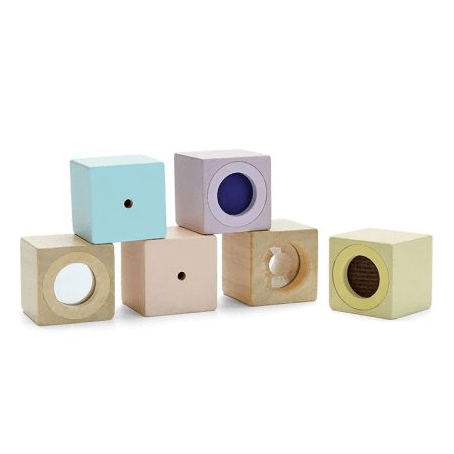
  2. Sensorial – Materials like sound boxes and color tablets refine the senses and introduce concepts like comparison and classification.
  3. Mathematics – Golden beads and number rods help children visualize math concepts like quantity and value.
  4. Language – Tools such as movable alphabets and phonetic objects lay the foundation for reading and writing.
  5. Cultural Studies – Maps, puzzles, and nature-based materials introduce geography, science, and cultural awareness.

These materials aren’t meant to be used just once. Repetition and mastery are key components of Montessori education. A child might spend weeks engaging with a single activity, deepening understanding through exploration rather than rushing toward a result.

Benefits beyond the Classroom

The use of Montessori materials often results in improvements beyond academic achievement. Children learn responsibility, concentration, patience, and independence — qualities that serve them well in every stage of life. The freedom to choose, combined with the structure provided by the environment, creates a balanced learning journey.

Parents who bring this model into their home often notice an increase in their child’s confidence, curiosity, and respect for order. Even in small living spaces, incorporating a few core Montessori materials can support a child’s learning path significantly.

Frequently Asked Questions (FAQs)

Q1: What age group benefits most from Montessori classroom materials?


Montessori materials are most commonly used for children between 2 and 6 years old, but there are age-appropriate extensions for older children as well. Each tool is designed to meet specific developmental needs relevant to different age stages.

Q2: Do I need to be trained to use Montessori materials with my child?


While formal Montessori training is beneficial for educators, many materials come with clear instructions and can be used effectively by parents with basic guidance. Online resources, videos, and manuals are widely available to help you use them at home.

Q3: Can these materials be used in traditional classrooms?


Absolutely. Many traditional classrooms incorporate Montessori elements to supplement their teaching methods. The materials can be a valuable asset for hands-on learning, especially in early childhood settings.

Q4: Are Montessori classroom materials expensive?


While some authentic materials can be costly, many affordable and even DIY options exist. The quality and durability of these tools often justify the cost over time, as they’re meant to be used repeatedly and passed down.

Q5: How do I know which materials to choose?


Start with core areas such as practical life or sensorial learning, depending on your child’s interests and developmental stage. Observing your child closely will help guide the selection of appropriate materials that support their growth.

By integrating Montessori Classroom Materials into learning environments, whether at school or home, parents and educators are making a conscious investment in a child’s independence, focus, and long-term success. These thoughtfully crafted tools go far beyond teaching letters or numbers — they inspire a lifelong love for learning.

Resource: https://kidadvancemontessori.blogspot.com/2025/07/Boosting-Early-Learning-with-Montessori-Classroom-Materials.html

Montessori Materials for Home: Boost Learning with Montessori Home School Materials

Providing your child with a nurturing learning environment doesn’t require a formal classroom. With a thoughtful setup and the right guidance, your home can become a powerful space for development, creativity, and independent thinking. Inspired by the Montessori philosophy, many parents today are choosing to bring elements of this time-tested educational method into their everyday routines.

Why Use Montessori Materials for Home?

The beauty of the Montessori method lies in its simplicity and intention. Kid Advance Montessori Materials for Home are not random toys—they’re carefully designed tools that engage your child’s senses and spark curiosity. These materials are usually made from natural elements like wood or metal and focus on a single concept at a time.

From shape sorters that teach geometry to pouring sets that build motor skills, these materials support early development without overwhelming the child. Instead of relying on digital screens or noise-making gadgets, Montessori tools allow children to learn through doing—measuring rice, folding towels, or matching colors and sounds.

Setting Up Your Home for Montessori Learning

Creating a Montessori-friendly environment at home doesn’t require expensive renovations. The goal is to make learning accessible, organized, and calm. Start by designating a small area in your home for specific activities.

Practical Life Area

This is where children develop coordination, independence, and confidence. Include child-sized items like brushes, pitchers, or dressing frames. These help your child learn essential life skills through imitation and repetition.

Sensorial Corner

Children aged 2–6 absorb information primarily through their senses. Set up trays with textured fabrics, color tablets, or sound cylinders to help sharpen their sensory perception.

Language and Math Station

Use materials that promote phonetic awareness and number sense. Sandpaper letters, movable alphabets, and number rods are effective, hands-on tools. These can be introduced gradually, based on your child’s interest and pace.

Integrating Montessori Home School Materials into Daily Routines

While formal homeschooling may not be every parent’s goal, using Montessori Home School Materials can significantly enhance home-based learning. These materials foster independent study and exploration. For instance, a wooden hundred board can help your child explore counting and number patterns. Language boxes can support vocabulary development.

Montessori learning at home is not about rigid schedules. Instead, it’s about making education part of your child’s daily rhythm. For example:

·         During meal prep: Let them pour, measure, and mix.

·         On walks: Explore shapes, colors, or count steps.

·         While cleaning: Give them tools their size so they can join in.

The goal is to help them become more aware, more capable, and more curious.

Benefits of Montessori Learning at Home

Some of the biggest benefits of incorporating Montessori practices and tools at home include:

·         Increased focus and attention span

·         Better fine motor and problem-solving skills

·         A stronger sense of independence

·         Greater confidence and self-regulation

·         A lifelong love of learning

This approach doesn’t rush children—it respects their pace. Instead of pushing performance, it invites participation.

Tips for Parents Starting Out

·         Start small: Introduce one or two materials and observe how your child engages.

·         Follow their lead: If they’re not interested in a specific tool, rotate in another.

·         Respect independence: Allow them to try, make mistakes, and try again.

·         Keep things organized: A clean and orderly space encourages focus and ownership.

Don’t feel pressure to replicate a Montessori classroom. The home version is about being intentional and responsive, not perfect.

FAQs

Q1: At what age can I start using Montessori materials at home?

You can start as early as 6 months with basic sensory toys, but most structured activities begin around 18 months. The key is to adapt to your child’s individual development, not just age.

Q2: Do I need to buy expensive Montessori tools?

Not at all. While specialized tools are useful, many everyday household items—measuring cups, clothespins, or bowls—can be used in a Montessori way. The focus is on hands-on, real-world interaction.

Q3: Can Montessori work if I’m not homeschooling full-time?

Absolutely. Even if your child attends traditional school, integrating Montessori methods at home can support deeper learning, independence, and life skills.

Q4: How do I know if a material is “Montessori-aligned”?

Look for items that are:

·         Purpose-driven (teach one skill or concept)

·         Made from natural materials

·         Simple in design

·         Encourage independent use and discovery

By choosing the right Montessori Materials for Home and blending them with Montessori Home School Materials, you can offer your child a learning experience that’s rich, respectful, and deeply empowering. With just a few changes to your home and mindset, the Montessori approach can become part of your everyday life.

Would you like a downloadable checklist for a Montessori home setup or recommendations on budget-friendly materials?

Resource: https://kidadvancemontessori.blogspot.com/2025/07/Montessori-Materials-for-Home-Boost-Learning-with-Montessori-Home-School-Materials.html

Discover the Educational Benefits of Montessori Puzzle Maps for Children

Early childhood education has transformed significantly in recent years. Instead of rote learning, more parents and educators are embracing hands-on tools that inspire exploration and deeper understanding. Interactive methods not only keep young learners engaged but also help develop critical thinking, memory, and motor skills. This evolution in teaching tools is especially evident in geography and culture-related learning activities.

Why Choose Montessori Puzzle Maps for Learning?

Kid Advance Montessori Puzzle Maps are intelligent educational tools designed to help children understand global geography in a tactile and visual way. Each puzzle map introduces learners to the shapes, positions, and relationships between countries, continents, and oceans, offering a sensory-rich learning experience.

The Montessori method emphasizes self-directed learning and real-world context, and these maps fit perfectly into that philosophy. By handling the puzzle pieces, children build not only spatial reasoning but also memory retention through repetition and discovery.

Features That Make Montessori Maps Unique

These puzzle maps are crafted with precision to ensure accuracy and child-friendliness. The knobs are placed at each country’s capital or central region, helping children relate geography to political or cultural significance. The sturdy wooden pieces are built to last and are easy for small hands to manipulate, making them ideal for young learners.

They are typically categorized into different types, including:

·         Continent Puzzle Maps

·         World Puzzle Maps

·         Individual Country Maps

·         Political and Physical Puzzle Sets

These types support a progressive learning approach, allowing children to start with broad geographical concepts and gradually zoom into more detailed studies.

How Montessori Puzzle Maps Encourage Independent Learning

Children love to explore with their hands, and puzzle maps give them the opportunity to do just that. As they remove and replace pieces, they naturally begin to memorize borders, locations, and even country names. More importantly, they do this independently, without the pressure of rote learning.

This method promotes:

·  Self-correction: If a piece doesn’t fit, the child instinctively tries again, encouraging problem-solving.

·  Cultural awareness: Exposure to global geography at a young age fosters openness to diversity.

·  Language development: Children learn country names, capitals, and continents, building vocabulary in a meaningful context.

Ideal Age Group and Usage Tips

Montessori Puzzle Maps are generally suitable for children aged 3 and up. However, the way they are introduced can vary by age. For toddlers, simple continent maps with large pieces are ideal. For preschoolers and kindergartners, more detailed maps with smaller countries can be introduced.

Here are some helpful tips for using puzzle maps effectively:

·         Start with continent maps to build a general understanding.

·         Introduce one map at a time to avoid overwhelming the child.

·         Combine map work with books, photos, or cultural stories.

·     Reinforce learning by asking questions like “Where does this country belong?” or “Can you find Africa?”

Long-Term Academic Benefits

Introducing geography at a young age leads to long-term academic advantages. Children who are familiar with world maps early on tend to excel in history, social studies, and current affairs later in school. They also show enhanced memory, better problem-solving skills, and a more global mindset.

Moreover, using hands-on tools like puzzle maps supports multiple learning styles—visual, kinesthetic, and even auditory if combined with storytelling or verbal cues.

Practical Learning beyond the Classroom

The use of Montessori-style puzzle maps is not limited to schools. Many parents have incorporated them into their home learning environments. These educational tools are especially useful for homeschooling families or as supplemental learning during weekends and holidays.

Because of their interactive and educational nature, puzzle maps also make excellent gifts for birthdays or holidays. They provide hours of engaging play while reinforcing essential academic skills.

FAQs about Montessori Puzzle Maps

Q1: At what age can my child start using Montessori Puzzle Maps?


Children as young as 3 can start with simple continent maps. More detailed maps can be introduced gradually as they grow older and develop fine motor skills.

Q2: Are these puzzle maps suitable for classroom use?


Yes. Montessori Puzzle Maps are designed to be durable and are widely used in both traditional and Montessori classrooms. They are also easy to clean and store.

Q3: How do puzzle maps support geography learning?


They offer a hands-on, visual approach to geography. Children learn by seeing, touching, and placing countries or continents in the correct spots, reinforcing both memory and spatial awareness.

Q4: Can I combine these maps with digital learning tools?


Absolutely. You can enhance learning by using globe apps, YouTube geography videos, or online quizzes alongside physical map play for a blended educational experience.

Q5: What should I look for when buying Montessori Puzzle Maps?


Look for sturdy materials (preferably wood), accuracy in design, smooth knobs, and safe, non-toxic paints. Maps with labeled control charts are also helpful for self-correction.

Montessori Puzzle Maps are more than just educational toys—they are foundational tools for building geographic knowledge, cultural appreciation, and cognitive development. Whether used in a classroom or at home, they offer a meaningful, interactive learning journey for every child.

Resource: https://kidadvancemontessori.blogspot.com/2025/07/Discover-the-Educational-Benefits-of-Montessori-Puzzle-Maps-for-Children.html

Design a site like this with WordPress.com
Get started