Walk into any well-prepared Montessori classroom and the first thing you notice is not a stack of worksheets or a whiteboard full of instructions. Instead, you see shelves of carefully arranged wooden objects, textured cards, colored beads, and simple tools that children choose and use on their own. This is the heart of the Montessori approach, and it all revolves around one idea: children learn best by doing, not by being told.
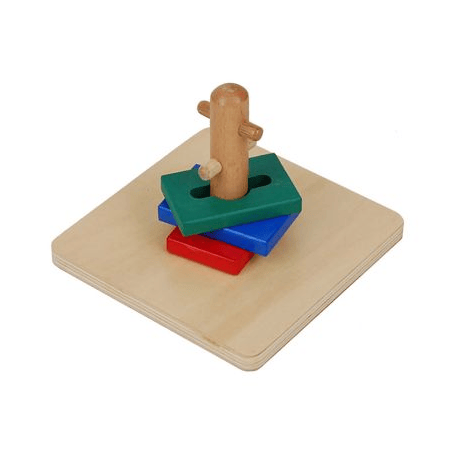
Kid Advance – Montessori materials are purpose-built educational tools developed from Dr. Maria Montessori’s scientific observation of how children actually learn. Each one is designed to isolate a single concept, engage the senses directly, and let a child discover — and correct — their own mistakes without an adult stepping in. Unlike conventional toys, every authentic material has a specific place in a carefully sequenced curriculum that moves from concrete experience to abstract understanding, and from simple ideas to more complex ones. This guide breaks down the main categories of materials, what they teach, and how to choose the right ones for a home or classroom setting.
What Are Montessori Materials, Really?
At their core, these materials are self-correcting tools. A cylinder block, for example, only fits back into its socket one way, so a child knows immediately whether they’ve solved the puzzle correctly — no grading, no correction from a teacher required. This built-in feedback loop is what allows children as young as 18 months through age 12 to work independently, build concentration, and develop genuine confidence in their own abilities. The materials are typically grouped into five major curriculum areas: Practical Life, Sensorial, Mathematics, Language, and Culture/Geography.
Practical Life Materials: The Foundation of Everything Else
Practical Life is the very first area a young child encounters, and it’s the foundation that every other area builds on. This category includes pouring sets, dressing frames, and everyday care-of-environment tools that develop fine motor control, hand-eye coordination, and sustained concentration. Introduced from as early as 18 months, these activities give children the experience of completing real, purposeful tasks on their own — folding cloths, transferring water, buttoning a frame — which builds the quiet confidence that carries them through every later stage of learning.
Sensorial Exploration Tools: Making Sense of the World
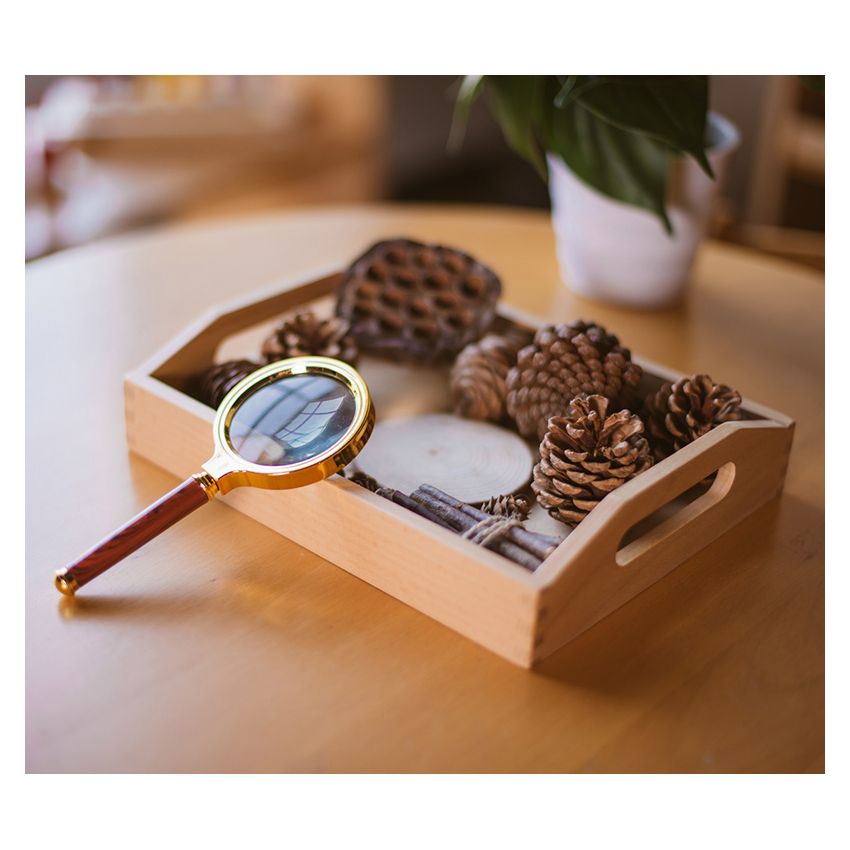
The Sensorial area helps children build a precise vocabulary for the physical world around them. Through hands-on materials, children learn to perceive and categorize differences in size, weight, color, texture, sound, and shape. This sensory groundwork isn’t isolated — it directly supports later learning in mathematics and language by teaching children how to organize and classify information, a skill they’ll rely on for years.
Mathematics Materials: Turning Abstract Numbers into Something Real
Rather than starting with memorized facts, Montessori math begins with physical, touchable representations of quantity. Tools such as numerical rods, spindle boxes, printed number cards, and bead materials let children physically manipulate numbers before ever seeing them as abstract symbols. Working with numerical rods and bead chains, for instance, allows a child to feel the difference between four and seven long before they’re asked to add them on paper. Because children can see and touch mathematical relationships, they tend to build a deeper, more lasting understanding of place value, operations, and even fractions.
Language Materials: Building Communication from the Ground Up
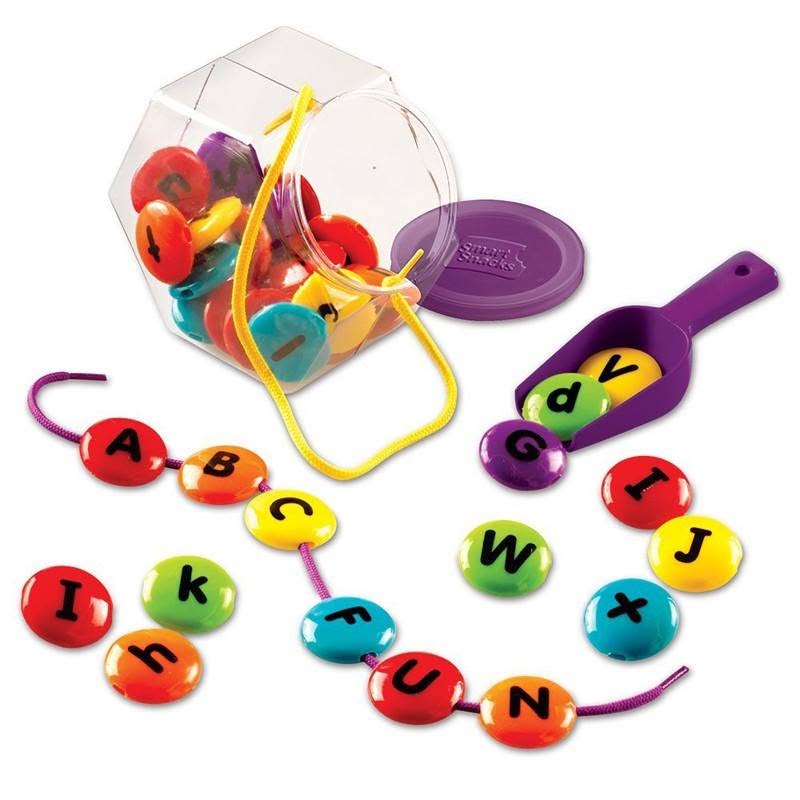
Language development in a Montessori environment also starts with the senses. Children often begin by tracing textured letters, connecting the sound of a letter to its shape through touch alone, long before they’re expected to write. As their skills grow, alphabet materials and grammar tools help build vocabulary, sentence structure, and reading confidence at each child’s own pace. This gradual move from concrete tracing to independent reading and writing creates a sturdier foundation for literacy than rote instruction alone.
Cultural and Geography Materials: Opening Up the Wider World
The Cultural area introduces children to geography, botany, zoology, science, and history through direct exploration rather than textbooks. Puzzle maps, land-and-water form trays, classified picture cards, and life-cycle materials let children handle and observe the world instead of just reading about it. This hands-on approach to culture and geography tends to spark a lasting curiosity and a genuine interest in scientific discovery that carries well beyond early childhood.
Choosing Materials for Home or Classroom
Whether setting up a single shelf at home or outfitting a full classroom, the goal is the same: give a child access to materials that match their current developmental stage without overwhelming them. A full classroom of 20–25 children typically needs two or three sets of the most frequently used materials so several children can work at once, while a home environment usually needs just one complete, well-chosen set per area to start. Selecting durable, properly proportioned materials — real wood, correctly weighted beads, accurately sized inset frames — matters more than sheer quantity, since precision is what makes the self-correcting design actually work.
Frequently Asked Questions
1. What age should a child start using Montessori materials?
Many Practical Life materials, such as simple pouring or dressing activities, can be introduced from as early as 18 months. From there, materials are sequenced to support children continuously through age 12, moving from Practical Life and Sensorial work in early childhood toward more advanced Mathematics, Language, and Cultural materials as children grow.
2. What are the five main categories of Montessori materials?
The core curriculum is organized into Practical Life, Sensorial, Mathematics, Language, and Culture/Geography. Each area builds on the one before it, starting with everyday practical skills and sensory exploration before moving into more abstract academic concepts.
3. Why are Montessori materials self-correcting?
Materials are designed so a child can see or feel immediately whether a task has been completed correctly, such as a cylinder that only fits one socket. This lets children work independently and learn from their own mistakes without needing constant adult correction, building both skill and confidence.
4. How many sets of materials does a classroom actually need?
A full classroom of roughly 20–25 children typically needs two to three sets of the most commonly used materials so multiple children can work with them at the same time, rather than waiting for a single set to become available.
5. Do Montessori materials only cover academic subjects like math and reading?
No. While Mathematics and Language are major areas, Practical Life materials build motor skills and independence, Sensorial materials refine perception of the physical world, and Cultural materials cover geography, science, botany, and history — together forming a complete picture of early childhood development, not just academics.
Final Thoughts
What makes Montessori materials different from ordinary educational toys isn’t their appearance — it’s the thinking behind them. Every pouring set, bead chain, and puzzle map exists to isolate one concept, invite a child to explore it at their own pace, and let them discover the answer for themselves. Building a collection that spans Practical Life, Sensorial, Mathematics, Language, and Culture gives a child everything needed to move confidently from concrete experience to abstract thought, one carefully designed material at a time.
 Kid Advance Montessori